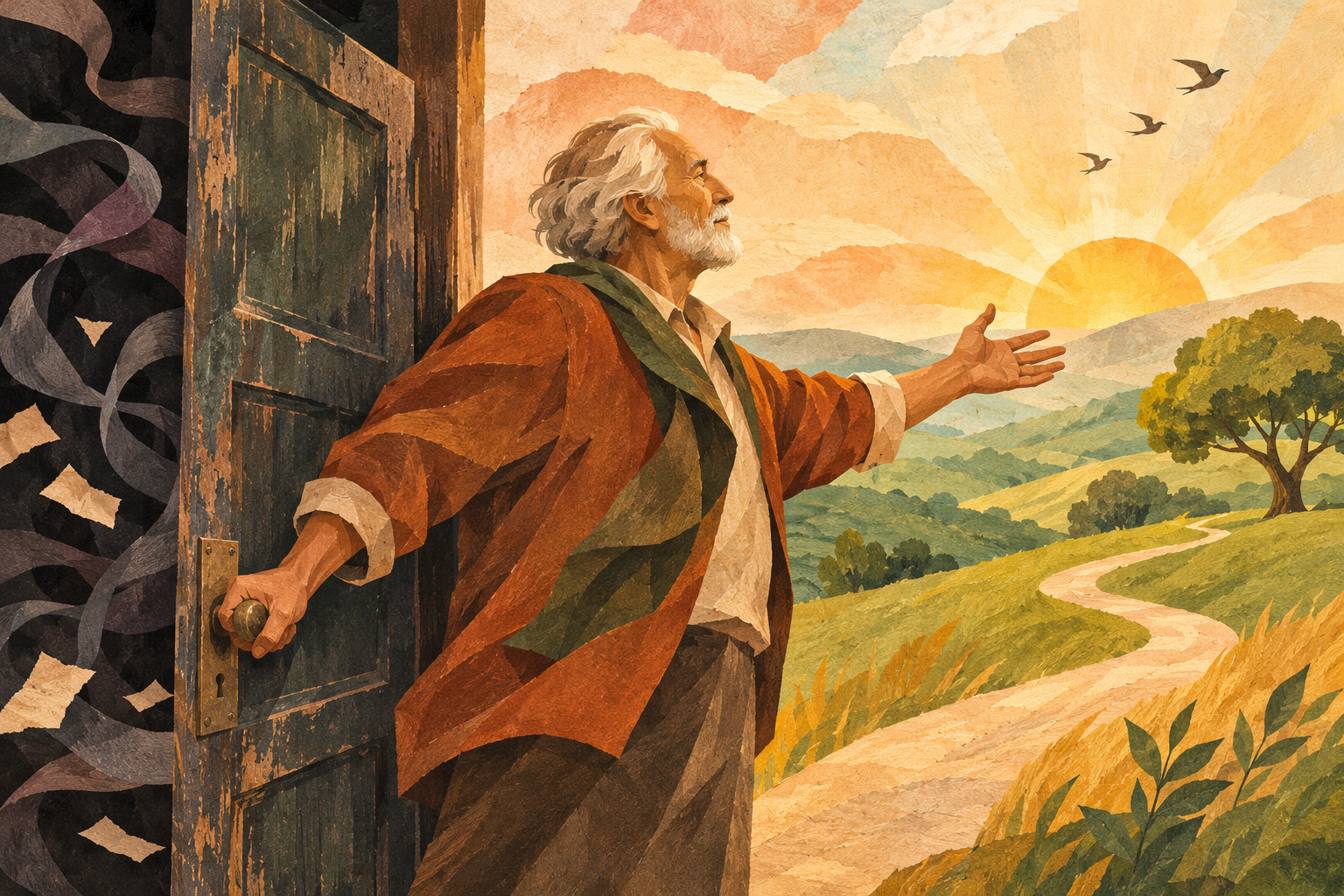
With eighty-two years behind me, I sit here with a serious problem that hopefully you don’t have—regret, guilt, and shame. If you’re one of the lucky ones who doesn’t bear this burden, or indeed has closed the book on that history, then you need not read any further; instead, go read a good book (perhaps one of mine).
“Guilt tells you: I made a mistake. Shame tells you: I am a mistake.”
Being a career researcher and an unfortunate bloke who finds it difficult to slow my mind, I looked closely at this dilemma to see if I might have hope of recovery. Below is what I gleaned. Only time will tell if I am able to succeed, but believe me, I will do my best, and if you’re still reading this, perhaps you might benefit as well from what I found.
Here’s something I never thought about—the need to separate guilt from shame. Guilt tells you, “I made a mistake.” Shame tells you, “I am a mistake.” We can regret a specific choice without letting it define our entire identity—wow! That says a lot. I know I’ve made too many mistakes, but I sure don’t want to believe “I’m” a mistake, and I sure hope there aren’t many who think so. A critical aspect of self-worth is to separate making a mistake from being a mistake. Past missteps function as a “textbook of life.” We are all a product of our past, history is our teacher, and wisdom tells us our errors do not make us unworthy. Though flawed—we are all worthy, we have purpose, and just maybe we are a miracle. Psychologists tell us regret is not just a pointless punishment; it is a present-moment emotional signal that points directly to what we truly value—now that’s worth reading again.
Old age is not meant to highlight past regrets and errors but is meant to be a forward-facing horizon focused on love, happiness, and the all-important “letting go.” For me, it’s the “letting go” part that I have trouble with, but I also know it’s true, and thus I’m going to make it my priority. Old age offers wonderful backward glances at all the magnificent and often breathtaking positive memories that will always be there for us. At the same time, old age should gently but firmly instruct us to put history’s negative in the past, choosing instead to anchor our remaining time in the promise of tomorrow’s simple and wondrous joys. While youth is consumed by building the future, and midlife by managing the present with career, relationships, children, etc., our final chapters of life offer a unique, liberating perspective of as much positive as we can invoke, dream of, and make happen.
Living a long life inevitably means accumulating a ledger of regrets, missed opportunities, mistakes, and interpersonal conflicts. However, old age teaches that carrying the heavy baggage of past mistakes is not only an exercise in futility, but it also results in stress that can seriously damage our health. Wow! Just maybe I can get rid of my big bottle of antacids. The weight of yesterday’s errors, if truly understood, taught us something that we indeed factored into our tomorrows, and thus had some positive weight. Here are three important points that sure make sense.
The illusion of control: Dwelling on historical errors implies we can change them when we know full well we can’t—how dumb is that? Aging brings the wisdom of radical acceptance that history is just that—past tense.
The cost of resentment: Holding onto old grudges or self-reproach consumes the vital, limited energy needed for the present and our tomorrows. (This one for me is major—I’d like to stop kicking myself.)
Forgiveness as freedom: True maturity involves pardoning both oneself and others, recognizing that past errors were the messy tax of human growth. (Well said.)
We made past choices with the level of awareness we had at that particular time. Looking back with today’s wisdom is unfair to our former selves simply because we didn’t have today’s wisdom back then. Here are four additional valuable points.
Treat ourselves the way we would treat a close friend who came to us carrying the same weight.
Forgive our past selves for not knowing then what we know now. Forgiving oneself is possible even while acknowledging we would make a different choice today.
When we open the door to reenter the errors of our past, quickly slam it closed by immediately thinking of all the love that surrounds us. (This is the one I must remember to implement.)
The more you slam that door closed, the easier it will become, until you are finally able to lock it closed. (That day can’t come too soon.)
Old age reframes what “tomorrow” means. It stops being a distant, anxiety-ridden destination and becomes a clean slate for immediate positive experience. When time is recognized as a finite resource, tomorrow becomes incredibly precious, for it represents a new day to witness a sunrise, read a book, travel, and love your children and spouse. Instead of wishing we could rewrite yesterday—an impossible task—we shift our focus to how tomorrow’s actions can leave a warm, loving, positive footprint for us, and finally begin to comprehend the depth of loving another as well as ourselves. The value in doing so is immense.
Old age serves as life’s ultimate editor. It cuts out the noise of the negatives and sharpens our focus on what truly matters—today and tomorrow. It frees our mind to grab the love and happiness of today, while ensuring that every tomorrow is met with an open, unburdened heart. That’s the whole point, isn’t it? To not be burdened by regret of past mistakes, but instead use that energy to move forward in love.
I don’t have many years left. So, as I slam the door on the negative and focus on today and tomorrow, I leave you with two thoughts from one of my favorite and esteemed writers, C. S. Lewis: “There are better things ahead than any we leave behind.” Also, “You can’t go back and change the beginning, but you can start where you are and change the ending.”
Let’s all smile, follow Sir Patrick Stewart’s lead, swish our hand forward, point to tomorrow, and shout, “Make it so!”
This page presents Timothy’s complete original essay.